
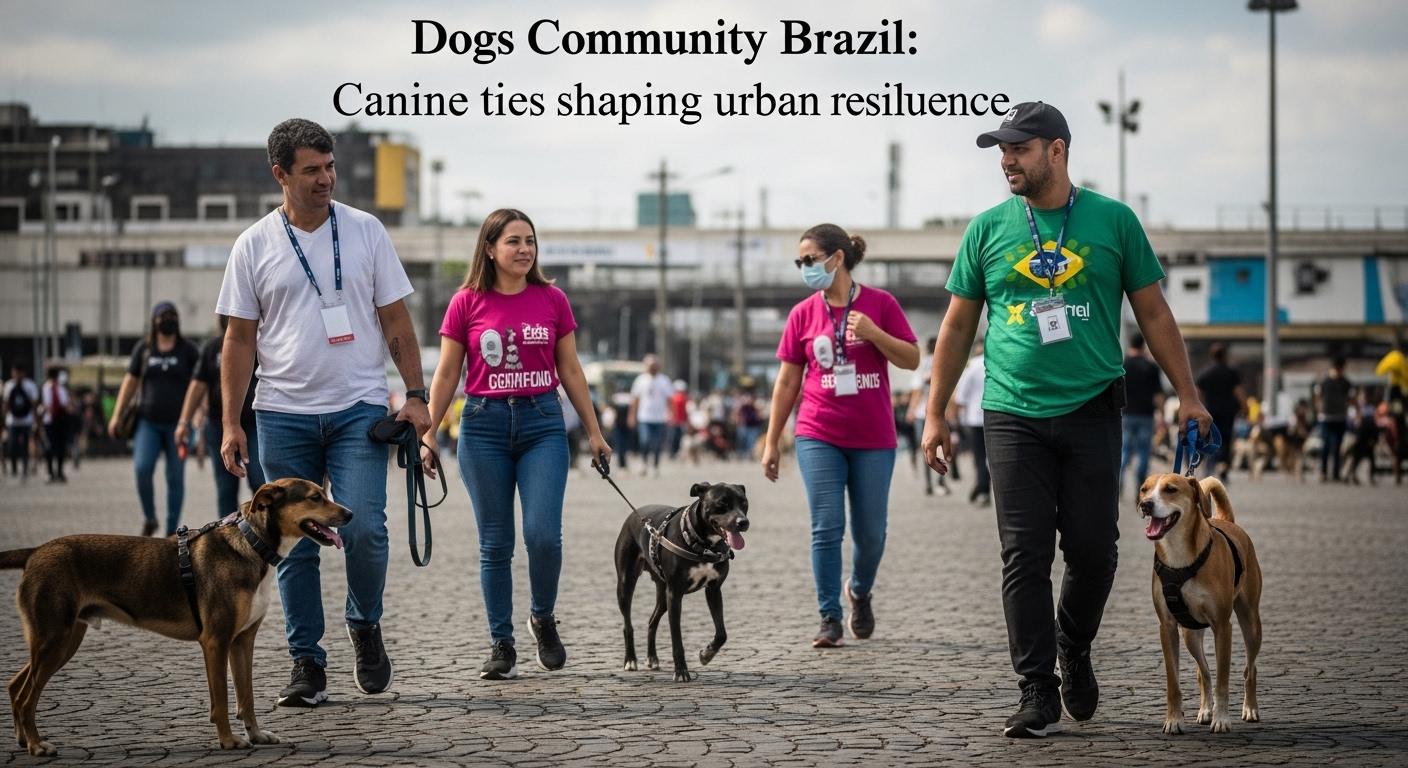
A Brazilian community street with dogs and neighbors gathering after floods.
Updated: March 16, 2026
The cbf Community Brazil initiative signals a shift in how Brazil’s football federation engages with communities, both within the country and among the diaspora. This analysis considers how the program might influence grassroots football, social programs run by clubs, and the broader quest for local development, while outlining the conditions under which it could succeed or stall.
Context and Stakes
Football in Brazil has long linked sport with social mobility, but governance structures often lag behind community needs. The cbf Community Brazil program arrives at a moment when local clubs, regional associations, and civil society are seeking deeper collaboration with federations to expand opportunities beyond the stadium. For supporters in Brazil and the diaspora, the initiative promises a more explicit channel for social investment tied to football values—youth mentoring, education, and health programs that leverage teams as community anchors. The stakes extend beyond medals and banners: success could translate into stronger trust in institutions, more robust grassroots pipelines, and a model for cross-border collaboration among Brazilian communities in the United States and elsewhere.
What the cbf Community Brazil Move Signals
The move signals a shift toward more formalized stakeholder engagement and evidence-driven program design. If funded and managed transparently, it could align football outcomes with social indicators such as youth participation, school attendance, and community health metrics. The diaspora angle—especially in the United States—offers scalable channels for mentorship, coaching exchanges, and cultural exchange that go beyond match-day entertainment. However, the initiative also raises questions about governance: who sets priorities, how funds are allocated, and what independent oversight exists to prevent duplication or politicization within a crowded field of social projects linked to sport.
For Brazil’s regional associations and civil society groups, the test will be whether cbf Community Brazil creates durable partnerships or merely acts as a branding exercise. The answer will depend on clear milestones, credible reporting, and mechanisms that allow community voices to steer a portion of the program’s agenda.
Community Impacts and Governance Risks
Positive scenarios point to expanded youth academies, safer after-school programs, and richer coaching ecosystems that anchor football in social development rather than spectacle. If well designed, the program could increase trust in institutions and broaden the social contract around football as a public good. Yet there are risks: uneven geographic benefit, potential duplication with state or municipal programs, and governance gaps that can undermine legitimacy. The diaspora dimension introduces extra complexity—quasi-legal channels, differing local regulations, and the need for local representation to ensure projects serve communities with real needs rather than generic outcomes. Independent evaluation, community advisory boards, and transparent reporting will be essential to manage these risks.
Actionable Takeaways
- Local clubs and community organizations should proactively map needs and propose joint initiatives with cbf Community Brazil that align with measurable social outcomes.
- Diaspora groups, especially in the United States, should establish representative forums to feed community priorities into planning and accountability processes.
- Media and civil society must demand transparent funding, clear milestones, and public reporting on program impact.
- Policymakers at municipal, state, and federal levels should coordinate with cbf Community Brazil to align programs with existing social services and education goals.
- Fans and volunteers can participate through community events and mentorship programs that connect players, clubs, and youth in meaningful ways.
Source Context
From an editorial perspective, separate confirmed facts from early speculation and revisit assumptions as new verified information appears.
Track official statements, compare independent outlets, and focus on what is confirmed versus what remains under investigation.
For practical decisions, evaluate near-term risk, likely scenarios, and timing before reacting to fast-moving headlines.
Use source quality checks: publication reputation, named attribution, publication time, and consistency across multiple reports.
Cross-check key numbers, proper names, and dates before drawing conclusions; early reporting can shift as agencies, teams, or companies release fuller context.
When claims rely on anonymous sourcing, treat them as provisional signals and wait for corroboration from official records or multiple independent outlets.
Policy, legal, and market implications often unfold in phases; a disciplined timeline view helps avoid overreacting to one headline or social snippet.