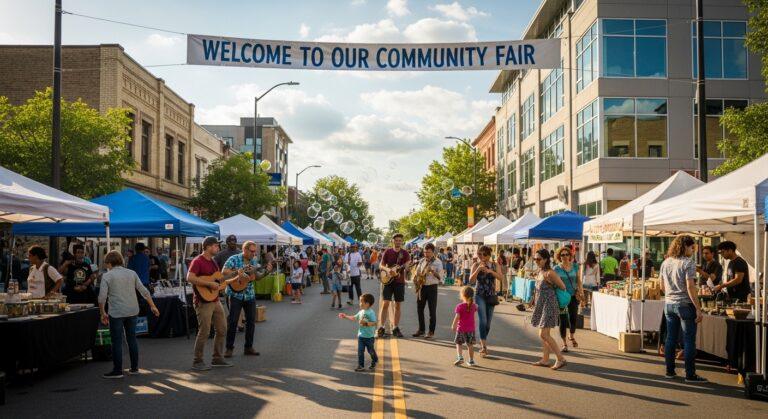
Community volunteers in Brazil organizing a neighborhood event, symbolizing revival and mutual aid.
Updated: March 16, 2026
Across Brazil’s cities and towns, the project of reviving Community Brazil is shaping a deeper conversation about belonging, shared spaces, and local resilience. This analysis traces how residents, volunteers, and small institutions stitch culture, mutual aid, and inclusive governance into durable social capital, asking not only what exists today but how neighborhoods can become engines of renewal for tomorrow.
The Ground Reality in Brazil’s Community Landscape
Brazil’s urban and rural communities face a mosaic of disparities: crowded public spaces that fail to meet everyday needs, uneven access to quality education and healthcare, and governance structures that often overlook neighborhood-level priorities. Yet amid these challenges, community-based networks persist—grassroots clubs, neighborhood associations, and faith-based groups that convene around food, music, and mutual aid. The causal thread is clear: when formal institutions retreat or misalign with local realities, people tend to fill the gap with informal cooperation, reciprocity, and culturally anchored practices. In many regions, street-level initiatives borrow strength from long-standing traditions—cultural gatherings, block associations, and informal lending circles—that have kept social ties intact even when budgets are tight. The question is not simply whether programs exist, but whether those programs empower residents to sustain and scale local collaboration without losing sight of equity and inclusion. To live up to the promise of reviving Community Brazil, policymakers and civil society must connect these on-the-ground practices with durable civic infrastructure, from participatory budgeting to adaptable cultural spaces that tolerate experimentation while protecting vulnerable communities.
Building Blocks: Culture, Civic Space, and Mutual Aid
Culture functions as infrastructure in its own right. Samba schools, street carnivals, capoeira circles, and local theater create habitual venues for leadership, mentorship, and mentorship-adjacent social capital. These cultural ecosystems are not mere performances; they are platforms where residents learn to organize, negotiate, and solve problems together. Mutual aid networks—ranging from food drives to health support groups—translate cultural trust into practical resilience, enabling families to weather economic shocks and public service gaps. The strength of these networks often depends on accessible civic spaces: libraries with after-school programs, multipurpose centers that welcome volunteers, and open-air squares that host pop-up markets and skill-sharing. When spaces are inclusive—physically accessible, safe, and affordable—people from diverse backgrounds can participate, reducing fragmentation and widening the circle of influence beyond traditional elites. The reciprocal logic is powerful: as communities invest in shared spaces, they accumulate social capital that lowers transaction costs for collective action, enabling more ambitious reforms later on.
Policy and Infrastructure Levers
Turning cultural and mutual-aid momentum into lasting renewal requires deliberate policy and adaptable infrastructure. Participatory and inclusive governance models—such as neighborhood councils, participatory budgeting, and community-led oversight—offer mechanisms to translate grassroot demands into funded projects. A practical path involves protecting and expanding flexible-use spaces that can host performances, training sessions, and emergency relief operations without bureaucratic bottlenecks. Digital inclusion also matters: affordable broadband, training, and localized information platforms expand the reach of community networks, enabling rapid mobilization and knowledge sharing. Government at municipal and state levels can catalyze these efforts by simplifying permitting processes for community groups, offering micro-grants for neighborhood initiatives, and pairing public spaces with community-led programs in ways that ensure accountability and transparency. The causal link is straightforward: when policy adapts to community rhythms, mutual-aid networks scale in legitimacy and impact, transforming informal ties into formal, sustainable civic capacity.
Actionable Takeaways
- Map existing spaces and actors: create a living inventory of community centers, libraries, cultural venues, and informal gathering spots to identify gaps and opportunities for collaboration.
- Strengthen inclusive governance: establish neighborhood forums with rotating leadership, accessible meeting times, and clear channels for residents to propose projects and secure funding.
- Invest in flexible shared spaces: repurpose underused public spaces into multi-use hubs for culture, education, and mutual aid, with simple permitting and low operating costs.
- Bridge digital divides: pilot affordable connectivity and digital literacy programs to connect residents with resources, volunteers, and decision-makers online and offline.
- Support youth leadership: fund and mentor youth councils that partner with elders and cultural groups to design actions relevant to younger residents while honoring tradition.
- Foster cross-community coalitions: create forums that connect urban, peri-urban, and rural communities to exchange strategies, resources, and volunteer networks.
Source Context
To illustrate the broader relevance of community-led renewal, consider related efforts and coverage from diverse contexts. These sources illuminate how culture, mutual aid, and local organization can complement formal governance: