
Updated: March 16, 2026
reviving Community Brazil is not a single event but a sustained practice of local initiative, mutual aid, and inclusive civic life that braid together neighborhoods, schools, and small businesses across the country. The goal is not only to restore a sense of belonging but to reframe governance as a shared project where residents identify needs, design responses, and hold institutions accountable. This piece offers a deep, practical analysis of how such renewal might unfold in Brazilian communities, balancing aspiration with pragmatism and outlining concrete steps for civil society, local government, and everyday citizens.
Roots of a movement in Brazil
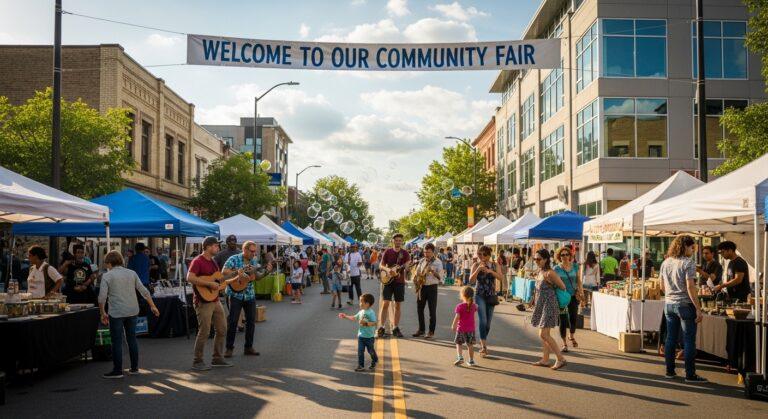
Historically, Brazilian urban life has thrived where neighborhoods cultivate social ties—through street markets, block associations, festas populares, and faith-based networks. Yet rapid urbanization and structural inequality have often strained these ties, pushing mutual-aid impulses toward informal channels that operate outside formal policy. A durable revival of community life requires recognizing the civil-society fabric as a legitimate counterpart to municipal programs, not merely a stopgap when budgets stumble. When residents see that their ideas can influence schools, health clinics, and public space, participation becomes a expectation rather than a gesture. The causal link is clear: where local leadership is cultivated, trust grows, and residents feel empowered to translate shared needs into collective action.
Economic precarity and uneven public investment have historically redirected energy toward quick fix solutions rather than long-term community infrastructure. A deliberate revival, however, treats social infrastructure—cooperatives, cultural centers, and neighborhood councils—as essential public goods. If communities can codify this infrastructure into repeatable models, neighborhoods gain resilience against shocks, whether health crises, climate events, or political turnover. The challenge is not merely money but governance: who chairs a council, how decisions are made, and how outcomes are measured in ways that respect local knowledge and diverse voices.
The role of mutual aid and local leadership
Mutual aid is not charity; it is a social contract among neighbors who share risks and resources. In a Brazilian context, mutual-aid networks might coordinate food security programs, create small grants for neighborhood improvements, or pool expertise to maintain public spaces. Central to this is leadership that is both representative and accountable—leaders who reflect the diversity of the community and who guard against capture by special interests. The most durable models couple grassroots volunteering with formal processes that allow residents to request support, track progress, and evaluate impact. When leadership pipelines link youth groups, women’s collectives, and elder councils, communities benefit from a wider range of perspectives and a sense that renewal is inclusive and ongoing.
Learning from related experiences across cities, successful mutual-aid ecosystems emphasize transparency, shared governance, and open data about where resources go. They also build bridges to existing institutions—schools, health centers, libraries, and cultural centers—so aid and services are not fragmented but integrated into daily life. This integration cultivates a sense of common destiny, turning mutual aid from ad hoc assistance into a stable element of public life. A practical mechanism is to pilot micro-grants or time-banking schemes with clear rules, annual reflection periods, and public-facing dashboards that show how community funds are allocated and what outcomes are achieved.
Digital platforms and the new civic economy
Digital tools have lowered the friction of organizing, enabling neighborhood groups to coordinate meetings, share resources, and crowd in new volunteers. WhatsApp groups, community apps, and open data portals can complement physical networks by reducing information silos and enabling real-time feedback. Yet the digital dimension also introduces risks: unequal access to devices or connectivity can widen gaps, while data privacy concerns require thoughtful governance. A practical approach is to balance online and offline methods, ensuring that digital channels amplify underrepresented voices rather than dominate them. Platforms can also host transparent grant applications, publish impact reports, and broadcast community events to widen participation beyond existing networks.
In a broader sense, a robust civic economy emerges when digital tools support tangible local outcomes—like coordinated food distributions, volunteer rosters for neighborhood cleanups, or shared tools libraries. When residents see measurable improvements—cleaner streets, safer parks, and more vibrant cultural programming—the incentive to participate deepens. This is not about replacing human connection with screens, but about using technology to extend the scale and reliability of community work while preserving the tactile, relational fabric that makes community meaningful.
Challenges and risk factors
Any plan to revive community life at scale must confront significant obstacles. Funding cycles, political volatility, and competing narratives about “who owns” neighborhood renewal can erode momentum. Gentrification looms as a risk when successful programs raise property values without accompanying protections for long-term residents. Equally important is the risk of burnout among volunteer leaders who shoulder a disproportionate share of responsibilities. Addressing burnout requires rotating leadership, shared accountability, and institutional support that recognizes time commitments as legitimate labor. Finally, the success of local initiatives depends on alignment with public policy—without coherent policy support, even well-designed programs risk becoming sporadic, short-lived experiments rather than enduring ecosystems.
These challenges underscore the need for scenario planning: envisioning both best-case and constrained-resource futures, identifying early warning indicators (participation rates, funding gaps, vacancy in leadership roles), and building contingency plans that maintain momentum during downturns. A deeper resilience arises when communities cultivate a culture of learning—documenting what works, acknowledging missteps, and iterating designs with input from a broad spectrum of residents. In other words, revival is less about heroic individual acts and more about sustainable systems of collaboration.
Policy and partnerships for scale
Scale does not mean homogenization; it means building interoperability among diverse locales so that successful models can be adapted to local contexts. Partnerships with schools, universities, cultural organizations, and municipal agencies can institutionalize mutual-aid ecosystems without erasing community ownership. A practical path includes formalizing funding streams that support core staff for neighborhood coalitions, standardizing evaluation methods that emphasize equity and local satisfaction, and creating cross-city networks that share best practices while honoring local discretion. When policy frameworks decentralize authority while offering shared tools—transparent dashboards, grant pipelines, and legal templates for mutual-aid governance—communities can move from pilot projects to enduring programs that weather political cycles and economic shifts.
The most effective scale strategy emphasizes equity: ensuring marginalized voices—youth in marginalized neighborhoods, women-led groups, and disabled residents—have real seats at the decision table. It also requires attention to sustainability, including diversified funding sources, long-term capacity-building, and ongoing mentoring of next-generation leaders. The result is a more resilient social fabric in which reviving Community Brazil translates into everyday life: safer streets, healthier social ties, and a more inclusive civic imagination.
Actionable Takeaways
- Invest in leadership development pipelines at the neighborhood level, prioritizing inclusion and succession planning.
- Launch transparent mutual-aid networks with clear governance, grant cycles, and public impact dashboards.
- Forge formal ties with schools, libraries, and cultural centers to anchor community work in everyday institutions
- Balance digital tools with offline engagement to ensure broad participation and trust-building.
- Embed continuous learning and rigorous evaluation to adapt models to diverse local contexts while protecting vulnerable residents from displacement.
Source Context
Below are background references that illuminate facets of community life, culture, and the energy of local organizing that underpin the analysis above.