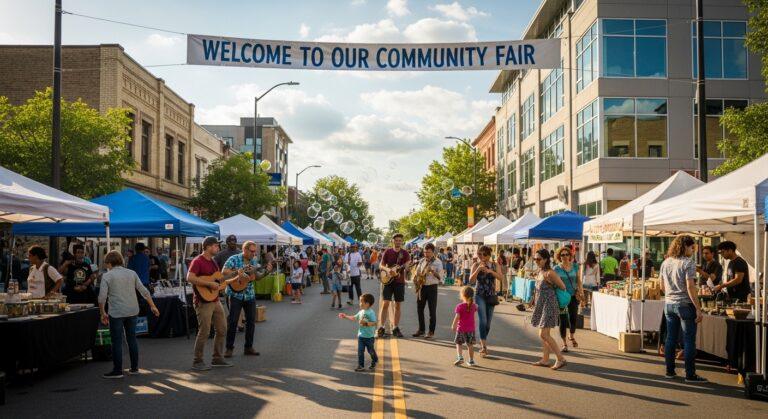
Brazilian community gathering in an urban park, discussing local initiatives.
Updated: March 16, 2026
From the steady cadence of community association meetings to a shifting lexicon of local identity, the phrase former Community Brazil is becoming part of civic discourse across Brazilian towns and neighborhoods. This reframing signals not decline but a recalibration of how residents organize, fund, and hold institutions to account in a rapidly changing urban and rural landscape.
Context: Reframing Community Identity in Brazil
Across Brazil, neighborhood associations have long carried a promise of local governance outside formal municipal channels. They coordinated block-by-block improvements, childcare networks, street safety patrols, and cultural events. But in the past decade, a trend has emerged: groups that once styled themselves as ‘Communities’ are scrutinizing the language, scope, and legitimacy of their own identities. The label former Community Brazil has started to surface in policy discussions, media, and on social media as communities re-evaluate who speaks for whom, how decisions are made, and what constitutes inclusive stewardship.
Several forces drive this reframing. Tight municipal budgets and a push toward formal accountability push groups to demonstrate impact, publish budgets, and align with city development plans. At the same time, digital platforms have lowered barriers to entry for residents who want to organize, but they also complicate governance: messages can reach thousands in hours, but accountability trails can blur if record-keeping is inconsistent. In this context, the phrase former Community Brazil functions as a diagnostic label rather than a verdict—an invitation to examine structures, not to infer stagnation.
Leadership, Memory, and Local Narratives
Leadership in Brazilian neighborhoods often travels through volunteers who balance day jobs, family commitments, and social trust built over years. Transitions—from long-serving boards to newer committees—carry memories of successful projects and moments of controversy alike. When a community rebrands or redefines its mandate, the memory of past initiatives can become a touchstone for present action or a fault line for disagreement. The idea of ‘former’ in the label signals more than a drop in formal status; it can reflect a recalibration of legitimacy. New leaders may insist on more transparent finances, more explicit equity criteria for participation, and greater openness to youth and marginalized residents. The risk, of course, is fracture: if communities fragment into smaller factions with competing visions, the very cohesion they seek to strengthen can be put at risk. Yet the countervailing force—the demand for inclusive governance—can spur innovations in participatory budgeting, regular reporting, and the codification of mission statements that endure beyond individual tenures. In a Brazil where local legitimacy is increasingly contested, the way communities narrate their work matters as much as the work itself.
Digital Platforms as the New Commons
Technology reshapes how communities learn, decide, and act. WhatsApp groups, community Facebook pages, Telegram channels, and emerging local platforms function as the modern agora—rapid, accessible, and expansive. They lower the barrier to mobilization but raise questions about privacy, data control, and equal access. In neighborhoods where literacy, internet access, and device ownership vary widely, leaders are learning to combine offline and online channels to ensure information flows are clear and inclusive. The tendency to centralize decisions in a single digital forum can obscure minority voices; conversely, well-designed digital governance—clear posting rules, accessible meeting minutes, multilingual content, and opt-in participatory surveys—can widen engagement and accountability. Looking forward, AI-assisted translation and localization could help Brazil’s diverse communities coordinate across languages and time zones, knitting together rural and urban initiatives that historically operated in parallel rather than in concert. In this sense, the “former Community Brazil” phrase may be less about a terminus and more about a transitional operating system—one that relies on both human memory and automated tools to preserve continuity while inviting renewal.
Actionable Takeaways
- Adopt transparent governance: publish annual budgets, meeting minutes, and project outcomes in accessible formats with translations where needed.
- Align branding with current mission: develop a clear, inclusive name and brand that reflects the community’s contemporary goals and values.
- Invest in inclusive communication: combine offline events with multilingual digital channels and accessible materials to reach diverse residents.
- Document and evaluate impact: maintain impact dashboards that track tangible outcomes, learn from failures, and share lessons publicly.
- Foster partnerships with local authorities and civil society: formalize collaboration protocols to ensure mutual accountability and resource alignment.
Source Context
The following sources provide comparative insights on leadership transitions, governance, and community resilience that inform these reflections: