bolsonaro Community Brazil: Bolsonaro in Brazil: A Deep Community-Ce
Updated: March 16, 2026
Across Brazil, the phrase bolsonaro Community Brazil has become a shorthand for how politics threads through the fabric of daily life—from street markets and school councils to neighborhood associations and local media. This analysis treats that phrase not as a slogan, but as a window into how national rhetoric translates into community-level behavior, trust in institutions, and the practical choices people make about civic life. By tracing the links between national messaging and local action, we can better understand the conditions that sustain or challenge social cohesion in Brazilian communities.
Politics at the neighborhood level: where slogans meet street life
Political discourse in Brazil often travels faster than policy. In many neighborhoods, banners, loudspeakers, and informal conversations become the primary channels through which residents gauge who represents their interests and how those interests align with everyday needs. The bolsonaro Community Brazil frame—whether embraced or contested—tosters into concrete questions: which schools get funding first, who wins a municipal contract, and how public safety priorities are set at the street-level. When residents see mass demonstrations or hear a candidate’s supporters articulate a vision for tax relief, job creation, or social programs, the effects ripple through local associations and parent-teacher groups, influencing who participates and how voices are counted in decisions that affect daily life.
Rallies, protests, and the cadence of daily life
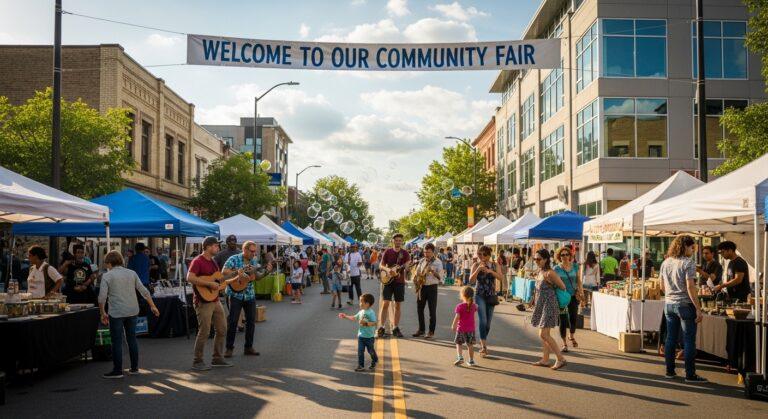
Public demonstrations do more than signal political leanings; they recalibrate daily routines. On days with large gatherings, commuter patterns shift, small businesses adjust hours, and community forums spring up to translate the sheer scale of national movements into accessible, neighborhood-focused discussions. The bolsonaro Community Brazil frame often intensifies these dynamics by creating immediate, local benchmarks—neighborhoods measure sentiment by turnout, not just by poll numbers. For some residents, this translates into heightened political talk in community centers, churches, and street-corner debates; for others, it prompts a retreat into work life or private networks as a buffer against perceived volatility. The result can be a paradox: increased political participation in some blocks, while others seek stability in routine, proximity to family, and steady access to essential services.
Media, messaging, and trust in local institutions
Messaging flows from national media, social platforms, and local outlets—each shaping how residents interpret national events within their own contexts. When narratives around bolsonaro Community Brazil emphasize certainty, sovereignty, or direct action, local institutions—schools, health centers, and municipal councils—become reference points for evaluating trustworthiness and efficacy. In communities where local leadership is perceived as responsive, residents are more likely to engage in neighborhood councils, volunteer for local initiatives, or participate in budget forums. Conversely, if messaging feeds suspicion toward national authorities, residents may gravitate toward informal networks for information, which can dilute attendance at formal public meetings or reduce turnout in participatory budgeting processes. The practical implication is that the success of civic engagement at the community level hinges on credible, accessible local channels that translate broad political narratives into concrete, accountable actions.
What-if scenarios: paths for the coming year
Looking ahead, three plausible trajectories illustrate how bolsonaro Community Brazil dynamics could unfold in the near term. First, a stability scenario where local leaders emphasize continuity, fostering predictable routines, known service levels, and incremental policy adjustments that keep communities engaged without abrupt disruption. Second, a volatility scenario where national headlines surge into neighborhood debates, prompting rapid mobilization around specific issues (education funding, public safety, or social programs) but risking fatigue if outcomes lag. Third, a convergence scenario where civic groups, media, and local governments align to co-create transparent, participatory processes that translate broad political discourse into tangible improvements—such as more open budgeting, clearer performance metrics, and stronger feedback loops for residents. Each path rests on the quality of local institutions, the availability of credible information, and the degree to which communities feel included in decision-making that affects their daily lives.
Actionable Takeaways
- Local journalists and community organizers should map neighborhood concerns to national narratives, translating broad slogans into concrete, locally relevant questions.
- Municipal leaders can create regular, accessible forums (virtual or in-person) that link budget decisions to everyday services like schools, healthcare, and safety—with clear timelines and accountability.
- Community groups should develop standardized issue trackers to monitor promises and outcomes, helping residents evaluate progress regardless of political affiliation.
- Education and civic literacy programs can empower residents to participate in budgeting processes, encouraging inclusive dialogue across diverse neighborhoods.
- Media partners should provide balanced coverage that highlights both national dynamics and local impact, reducing misinformation and building trust in local institutions.
- Policymakers and civil society groups should foster cross-block collaboration on shared concerns (infrastructure, sanitation, access to services) to build resilient local networks.